Introducing Forensic-Archaeo-Analytics (FAA)
A Corroborative Framework Grounded in Modern Data-Driven Principles for Evidence-Based Investigation of the Past


When you work with data all your life, you get used to finding and investigating discrepancies. In fact, even when something as small as a penny doesn’t add up, you go digging until you find the problem.
This trains the mind over decades to spot patterns that simply don’t add up.
And as soon as you start looking at the dominant narratives in fields like Indology and South Asian studies, you begin to notice similar discrepancies that cannot be ignored.
So you dig, and you start finding things that should have been noticed much earlier.
Then you realize, they’re not really “trained for science” or even in the “scientific method” as rigorously as one might expect.
Of course, because of the rigour you’re used to, you actually check if you need a degree in history and lookup the curriculum and methodologies. Then you realize there’s nothing they do that actually justifies spending several years in academia just for a qualification.
It becomes clear that much of historical investigation depends on scientific and technical investigations, fields in which many historians themselves are not deeply trained.
It is therefore no surprise that, in recent years, many scientifically and technically trained individuals have begun producing historical work that is far more rigorous and evidence-driven.
The gap in the narrative vs reality, essentially a form of data mismatch, tends to be the primary driver for many technically inclined people to start researching history.
While historical research presents challenges everywhere, the history of the Indian subcontinent faces certain unique difficulties that make reconstruction particularly complex. There are…
Major Challenges in Reconstructing the Past
The further ancient you go, the harder it becomes, because of the following challenges…
Challenge #1 - Epistemological and Institutional Bias
A culture and civilization that has been subjugated through academia in more recent centuries, especially through the forceful implementation of the Prussian system on what was once the ‘cradle of education’… has suffered immense harm.
At the same time, the creation of academic branches such as Indology and South Asian Studies often went beyond study into appropriation of knowledge, frequently accompanied by a demeaning view of the native culture.
This attitude continues in sections of academia, which have positioned themselves as authoritative from a Western standpoint. Unfortunately, this perspective has also been transmitted into Indian academia for quite some time.
In fact, entire books have been written on this problem.
Now, there is certainly some good information in these works, but it requires careful filtering and, at times, debunking to get as close as possible to the facts. The challenge exists because many so-called admirers of Indian culture also carry inherent biases that are not immediately visible on the surface.
Challenge #2 - Physical Destruction of Academic Institutions and Libraries
The very violent invasions in the past which included mass destruction of venerable academic institutions and their large libraries like Nalanda, Takshashila, Odantapuri, Vikramshila, Vallabhi, Nagarjuna and many more… resulted in a tremendous loss of material evidence.
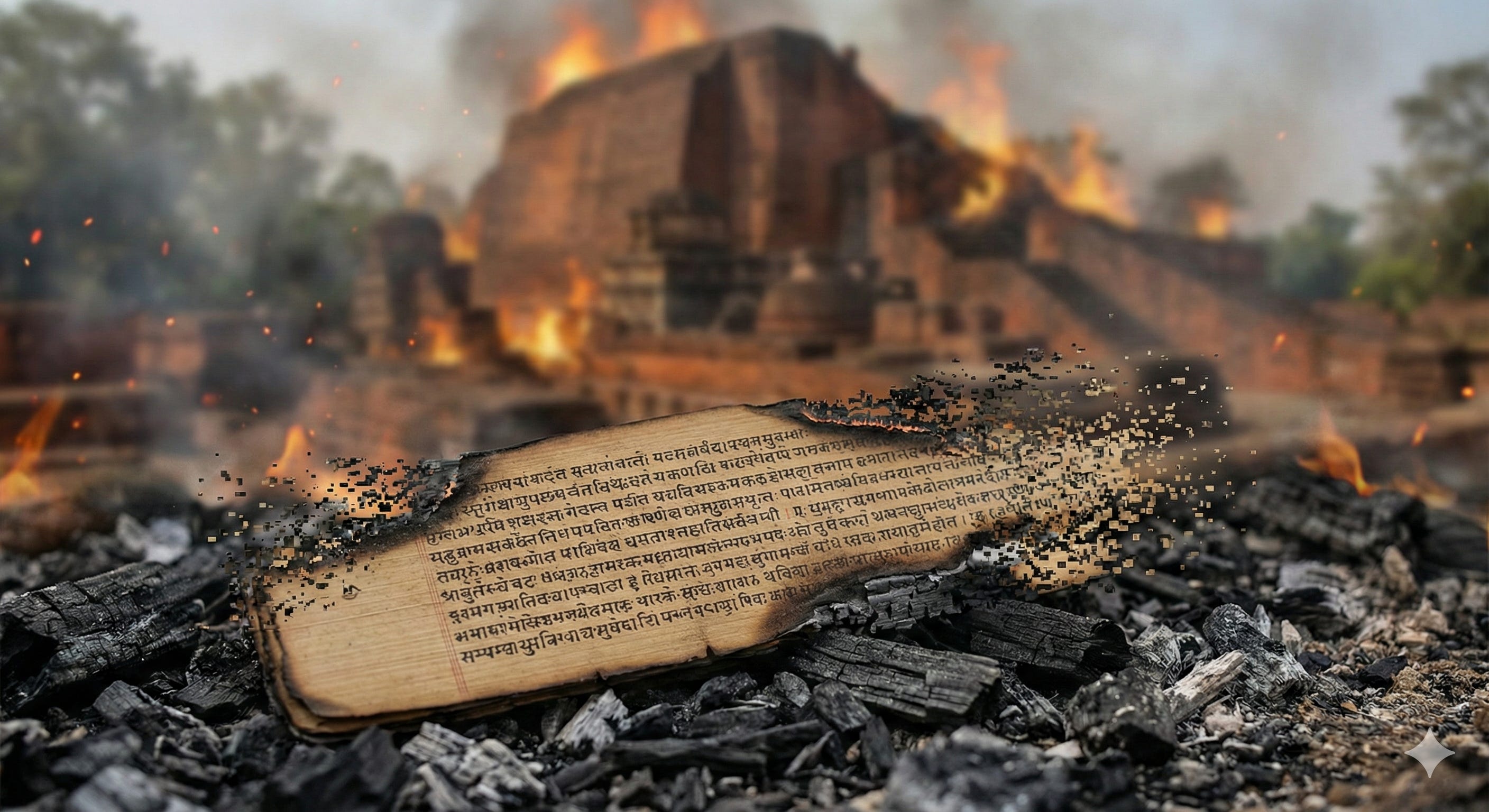
At times we find references to these institutions in surviving records, but the genocidal barbarism of Islamic invaders and looters resulted in irrecoverable loss of what would have been some of the highest levels of knowledge at the time, along with the physical evidence that might have survived to the present day.
Reconstructing what has been lost cannot be done in a straight-forward manner. Logical inference, corroboration, and postulation become necessary tools in such circumstances.
Challenge #3 - Culturally Eco-Friendly Societies and Civilizations
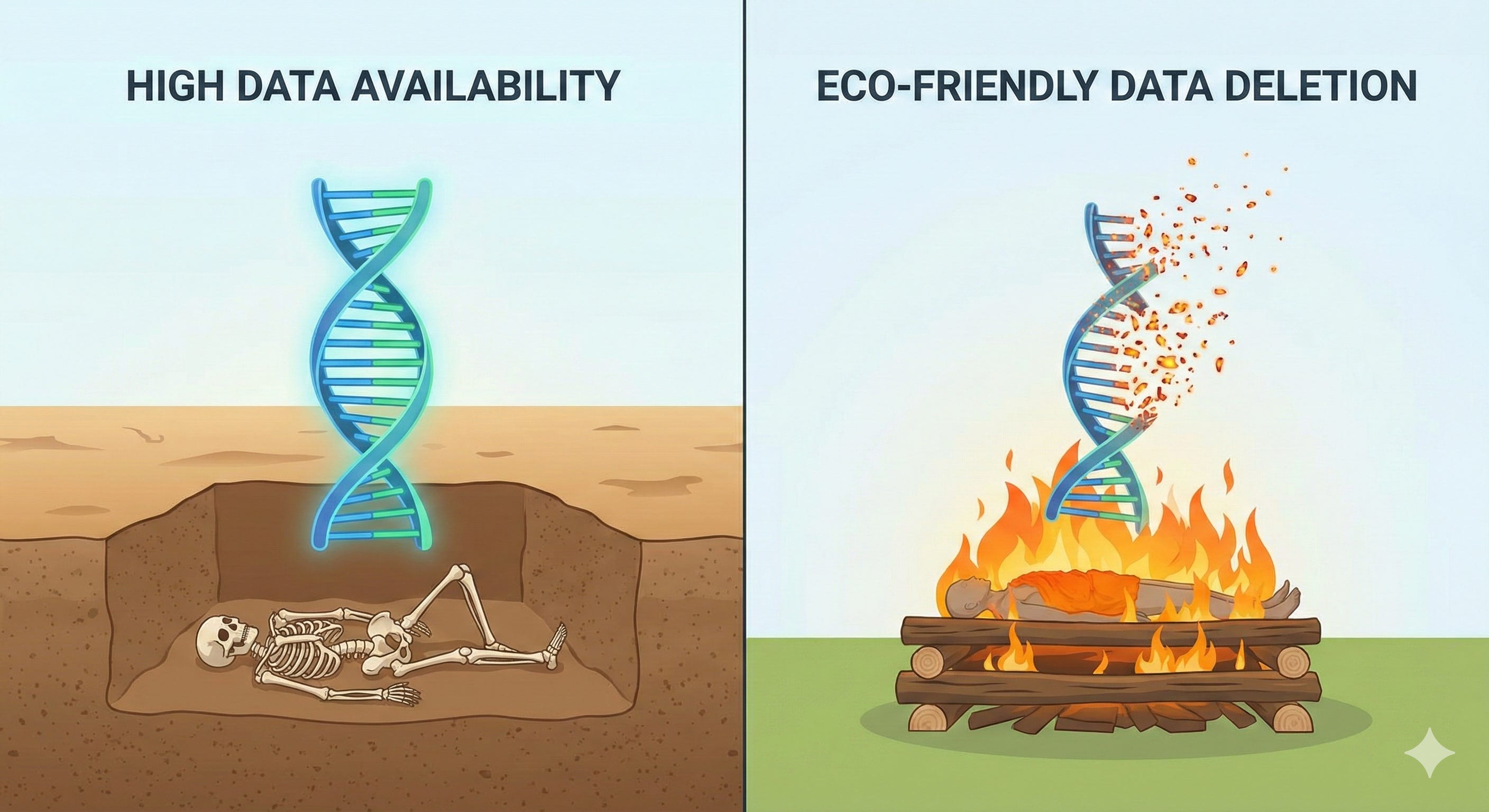
A culture that has historically been rather environmentally friendly in its approach to life does not leave much usable physical evidence. Use of biodegradable construction materials results in loss of archaeological remains. Eco-friendly societies also try to minimize their footprint naturally through their practices.
Cultural practices like cremation completely destroy genetic evidence for the most part and therefore reduce or eliminate genetic evidence. When compared to a culture of burial or even mummification, the chances of the potential of DNA extraction goes quite dramatically.
When trying to study many ancient native, tribal and aboriginal societies which had eco-friendly practices, the same challenges exist. Sometimes you get partial pictures also because of partially urbanized societies which skew the narrative.
Often to understand things in the past you need to look at several practices that exist to this day which can give us glimpses into the past.
Challenge #4 - Decomposition of Material in Specific Soils and Climates.
Researchers often rely on physical evidence such as surviving archaeology or metal artifacts, but this can sometimes be challenging because of rapid material decomposition. Regions like India have climate and soil factors that can decompose many metal artifacts over a few millennia. Take, for example, the moist and humid regions of the Ganga–Yamuna basin or even parts of the Deccan plateau. Iron in such environments can undergo stratified corrosion. Halide-driven processes can turn stable iron into minerals like akageneite, which are highly unstable and can turn to dust over time.
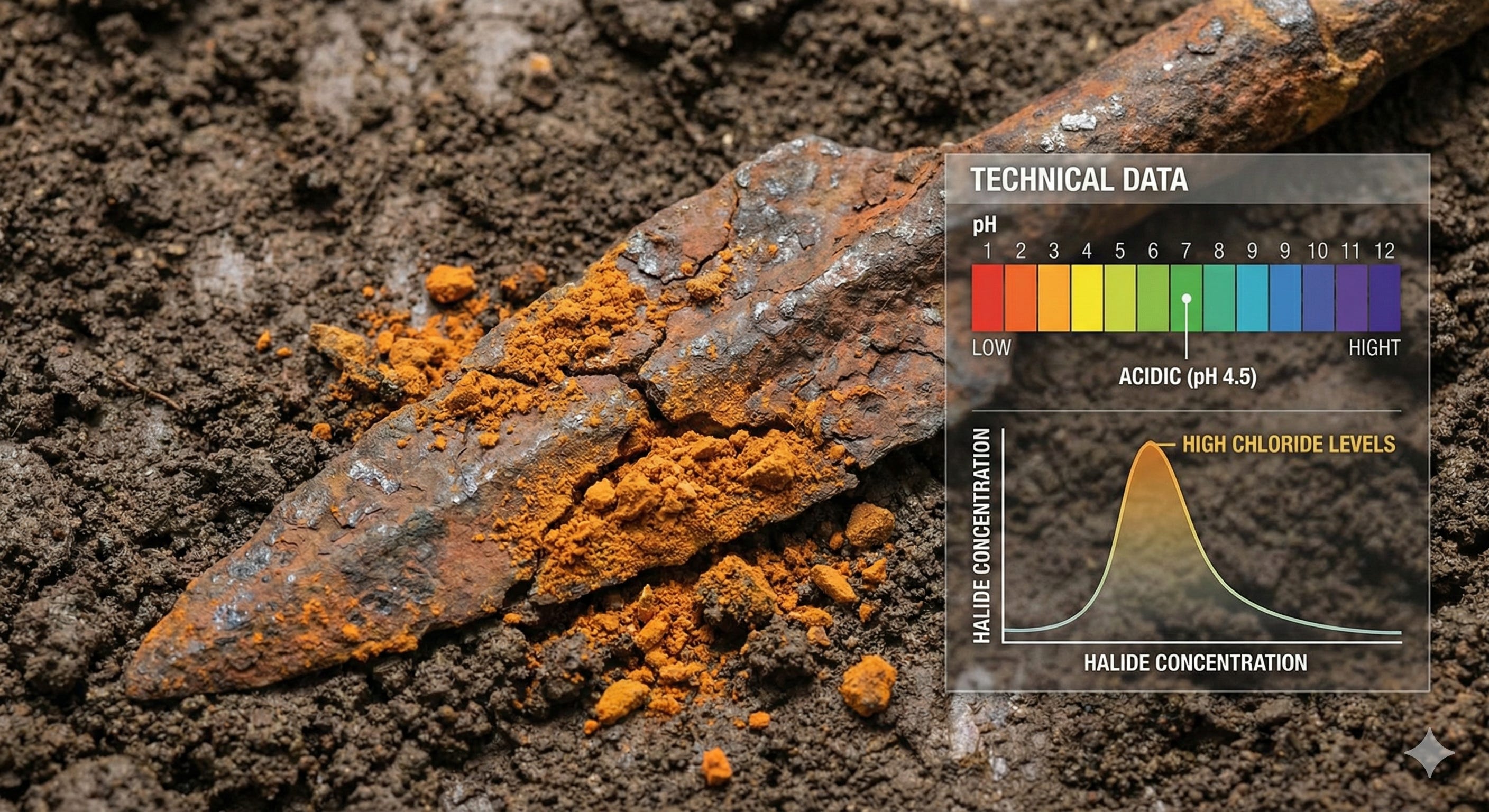
As soon as you begin talking about cycles that span multiple millennia, this creates serious challenges. While metals have been used traditionally in India for several thousand years, there are references to metal weapons in scriptures. The lack of their availability today does not automatically date those references to the most recent archaeological finds.
When other evidence points to several millennia earlier, it is plausible that many such artifacts may simply have decomposed. This is very different from dry, sandy regions, where remains can be preserved for far longer.
Therefore, multiple types of evidence may have to be relied upon for corroboration, even if certain forms of physical evidence are lacking.
Challenge #5 - Next to Impossible to Date Oral Knowledge Transfer Mechanisms
A culture that has a highly sophisticated method of knowledge transfer orally, and one that has survived to this day, cannot realistically be dated for the origin of the methodology. It certainly cannot be dated based only on written evidence, because writing, which came later, cannot tell us when such practices began.
There are also factors in the past that led these practices to evolve to the level of sophistication they have achieved, so much so that they have remained largely unchanged for several millennia. Such practices are next to impossible to date accurately, and relying only on written aspects does a disservice to such cultures.
These are some of the major challenges. There may be others as well, depending on the subject, period, and type of evidence involved, which brings me to…
Some Critical Limitations of Existing Frameworks
The following are some limitations that frequently arise in the application of existing frameworks to long civilizational timelines.
Selective Use of Sources and Circular Citation Chains
With the increasing availability of primary sources, it is now possible to verify many claims directly. In doing so, one often finds that what is presented as “established knowledge” is sometimes built on selective references, circular citations, or assumptions that were never rigorously validated.
In some areas of the humanities, particularly in fields such as Indology and South Asian studies, these citation chains have occasionally reinforced narratives rather than testing them.Sheet Anchor Bias in the Use of Physical Evidence
Physical and material evidence from fields such as archaeology is often treated as the primary or definitive source, with other forms of evidence used only for corroboration.The problem with this approach is not archaeology itself, but the bias introduced by treating any one evidence stream as the sheet anchor. When a narrative becomes anchored in a particular interpretation of physical evidence, other forms of evidence that challenge that interpretation are sometimes dismissed prematurely.
This can lead to conclusions being constrained by the limitations of a single evidence type and reinforce confirmation bias.
In long civilizational timelines, where physical evidence may be fragmented, unevenly preserved, or even absent, such bias can significantly distort conclusions.
Limited Engagement with Indigenous Epistemes and Domain Experts
Many traditional knowledge systems have their own internal methods of validation, interpretation, and transmission. However, practitioners and scholars trained in these traditions are often:
- Not consulted in meaningful ways,
- Treated as irrelevant to modern scholarship, or
- Placed on a pedestal in areas outside their actual domain of expertise.
Both dismissal and misplaced reverence can distort understanding.Insufficient Training in Scientific Method and Revision of Theory
A core principle of scientific inquiry is that theories must be revised or replaced when new evidence emerges.As technologies advance, new forms of evidence are becoming available through satellite imagery, paleo-channel mapping, materials analysis, and other tools that can reshape our understanding of the past.
Frameworks that are not structured to incorporate new evidence systematically risk becoming static, even when the underlying data landscape is changing rapidly.
In such cases, narratives persist not because they remain supported by evidence, but because the framework itself resists revision thereby rendering it unscientific in its nature.
Epistemic Mismatch of Modern Historical Inquiry
In many modern historical traditions, the primary epistemic focus is on historicity and historiography.This often prioritizes aspects such as chronology, documentation, and material traceability as principal means of validation. While these are important, they do not exhaust all possible modes of knowing or methods of inference, especially given their inherent limitations.
Additionally, interpretive frameworks developed in modern or Western contexts are often applied retrospectively to ancient structures, conditions, and social norms. Concepts drawn from contemporary political, economic, or disciplinary categories may not align with the epistemic assumptions of the civilization being studied.
When applied to societies with long oral traditions, integrated knowledge systems, or alternative epistemic frameworks, such narrowing can distort interpretation. Questions of knowledge transmission, conceptual evolution, or embedded scientific practices may not be adequately addressed if the framework is limited to documentary or material historicity alone.
Along with the limited exposure to the scientific method among many experts in the humanities, these limitations compound the problem further. This often results in gaps in the available data when attempting to analyze ancient and environmentally sustainable civilizations and human settlements, especially those that existed around 5000 years ago and earlier.
As a consequence, existing analytical approaches may appear inadequate when dealing with such conditions, highlighting the need for a more structured, evidence-driven, and multi-pronged analytical framework. One that incorporates corroboration for acceptance or dismissal, applies appropriate weighting to different forms of evidence, and remains open to revision as new data emerges.
In response to these methodological gaps, an analytical framework grounded in data-driven principles is proposed for the investigation of the past. While the current application is primarily focused on Indic civilization, it can be extended to any geography, civilization, or field of historical inquiry.
This framework is:
Forensic-Archaeo-Analytics (FAA)
Let’s first break this down, as each of those terms is intentional.
Forensic - The term “forensic” refers to the application of scientific methods for the investigation of events, typically in a legal context. More broadly, however, it denotes the use of structured analytical techniques to examine incomplete, fragmented, or indirect evidence in order to reconstruct past events with a high degree of reliability.
In the context of historical inquiry, the forensic approach implies the careful evaluation of available data, identification of discrepancies, classification of evidence, and corroboration across independent sources and evidence types in order to arrive at defensible conclusions.
Archaeo - The term “archaeo” refers to the study of ancient systems, whether they are physical, such as archaeology and archaeo-botany, or social, scientific, linguistic, and cultural, such as archaeo-astronomy and more.
This allows for a more reliable reconstruction of past civilizations, especially in contexts where physical evidence may be limited or degraded.
Analytics - Analytics refers to the disciplined application of data-driven methods to identify patterns, test hypotheses, and evaluate competing interpretations.
This involves:
Classification of evidence types
Identification of independent epistemic streams
Systematic corroboration of evidence
Evaluation of evidentiary weight based on data
An openness to revision as new data becomes available
This analytical layer ensures that conclusions are not based on isolated data points, but on cumulative and corroborated evidence backed by a combination of evidence types, logic, and the scientific method.
The Methodology
Because we are often dealing with ancient history where evidence is either lost or scattered, and misinformation abounds even in so-called authoritative texts, we must use a structured framework to analyze any claim, including those made by recognized experts or authorities.
Nobody gets a free pass, whether they are a traditional authority, academic scholar, or independent researcher.
To analyze your findings, several types of evidence can be used. However, there are a few core principles that must be followed:
No single evidence type is considered primary. They are all equal and work towards corroboration.
Any type of evidence may serve as the sheet anchor, with other types used for corroboration.
A single piece of evidence cannot be considered sufficient for any conclusion. At least one independent type of evidence is required for corroboration. More types of corroboration increase the weight of your conclusions, but two are sufficient to hypothesize and arrive at provisional conclusions.
There are good reasons for doing things this way. Multiple corroborating evidence types increase the weight of your conclusions. However, all conclusions remain open to revision if and when new data emerges.
FAA openly accepts this limitation in order to remain scientific.
While this research methodology is initially inspired by an IEEE framework, it has been mapped to an Indic methodology known for its structured approach to discovering truth. This Indic methodology is the Nyāya framework, which maps rather well to the modern IEEE approach.
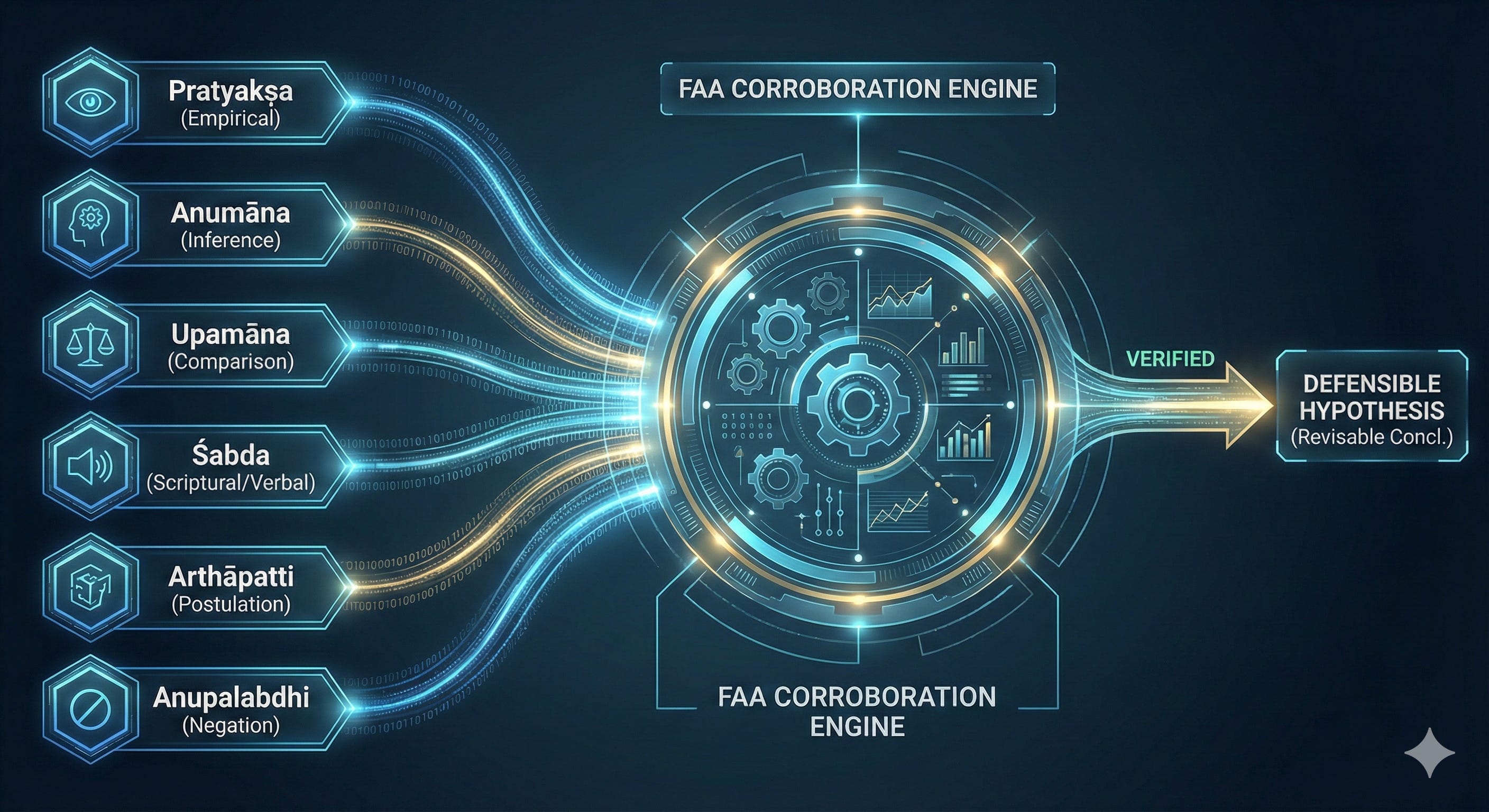
There are some small modifications to this Nyāya-inspired framework, along with a unique methodology that relies on six pramāṇas, or types of evidence, even though Nyāya itself traditionally accepts only four of them.
Here they are summarized:
प्रत्यक्षानुमानोपमानशब्दार्थापत्त्यनुपलब्धयः प्रमाणानि।
pratyakṣa–anumāna–upamāna–śabda–arthāpatti–anupalabdayaḥ pramāṇāni
Pratyakṣa (Empirical Evidence) - This refers to that which is experienceable through our outer or internal senses. The levels of acceptance can vary, with some perspectives accepting only what can be experienced through the five senses and nothing else.
Anumāna (Estimation/Inference) - This is an inference based on observation. It is a logical estimation. The common example given is, “Where there is smoke, there should potentially be a fire.”
Upamāna (Comparison) - This refers to comparison between similar things. For example, a large forest cat may be compared to a small house cat which is easier to study. The larger cat is an exaggeration of certain features, especially size. The reverse may also be applied for minuscule things that are not directly visible but share similarities.
Śabda (Verbal/Scriptural) - This literally means “word” and, depending on levels of acceptance, may range from eyewitness testimony to scriptural evidence. Something that has been written or spoken is counted. Even lore may fall under this category, though acceptance levels may vary among researchers. The epistemic authority of the texts or works of the civilization being analyzed is an important aspect which is often neglected.
Arthāpatti (Postulation) - This refers to postulation or that which becomes logically evident. One can make deductions based on available evidence. Many analytics professionals use this when examining data to arrive at potential interpretations. For example, when examining decimals to the power of ten, sine difference tables, and algorithmic square and cube root extraction in the Āryabhaṭīyam, one may infer that the concept of zero likely evolved over a significant period prior to Āryabhaṭa.
Anupalabdhi (Negation) - This refers to negation used to demonstrate absence or falsehood. It may also be applied as a negative test for what one intends to prove. For example, the absence of metal weapons in archaeology may actually push dates beyond 5 KYA when dealing with certain types of soil and climate, especially if other corroborating evidence exists. The presence of such artifacts, conversely, ensures that the dates are more recent than 5 KYA under the same conditions.
These evidence types are classifications and may occur from zero to multiple times within the course of research. Corroboration within a single type is useful. However, corroboration across independent types carries greater evidentiary weight.
Dialectical Orientation in FAA
In addition to evidentiary classification and corroboration, FAA also draws from the Nyāya tradition in its approach to intellectual discourse.
Nyāya recognizes three primary modes of debate which we apply to our research:

Vāda (Truth-Oriented Dialogue) – Truth-oriented dialogue conducted with the intent of examining claims and arriving at valid conclusions through reasoned argument. This is non-hostile, and even a debate format is used with the goal of discovering the truth.
Jalpa (Victory-Oriented Debate) – Debate conducted with the primary aim of winning the argument, often through rhetorical devices rather than evidence. This is essentially what we see in modern debate. There may be situations where there are applications of this, and it is rather easy to get pulled into it. Therefore, it must be consciously avoided.
Vitandā (Destructive Criticism) – Purely destructive criticism aimed at refuting the opponent’s position without offering a defensible alternative. This is considered the lowest form and should be avoided if possible.
FAA explicitly seeks to operate within the domain of Vāda as much as humanly possible. Arguments constructed under FAA are intended to:
Evaluate competing claims based on corroborated evidence
Remain open to revision in light of new data
Prioritize explanatory adequacy over rhetorical victory
Conversely, FAA seeks to avoid Jalpa and Vitandā, where arguments may be structured to defend predetermined conclusions or to dismiss opposing views without substantive analytical engagement.
Scholarship that functions as Jalpa or Vitandā can be filtered out as "narrative setting" or "data corruption," while Vāda remains the primary mode for reconstructing long civilizational timelines with technical integrity.
This dialectical orientation ensures that historical reconstruction remains an evidence-driven inquiry rather than an adversarial exercise in narrative defense. It also helps extend the framework beyond historical inquiry and into other fields.
Scope and Applicability of Forensic Archaeo Analytics (FAA)
While the current motivation for developing FAA arises from challenges encountered in reconstructing the history of the Indian subcontinent, the framework itself is not limited to any specific geography, civilization, or time period.
Beyond historical inquiry, the FAA approach may also be extended to interdisciplinary research contexts where multiple independent evidence types must be evaluated systematically in order to form defensible hypotheses.
FAA is designed as a corroborative analytical methodology that can be applied to any domain ancient or modern. In fact, you can already find parallels of these evidence types in fields like medicine.
In this sense, FAA is intended not as a replacement for existing disciplinary methods, but as an integrative framework that enables structured corroboration across diverse forms of evidence.
This model has already been used in the IKS (Indian Knowledge Systems) context to present papers at international conferences on topics that include as Sanskrit, Computing, and Governance models from ancient texts.
Conclusion
Reconstructing the past, especially across long civilizational timelines, presents its own challenges that have not always been adequately addressed by conventional historical frameworks. Limitations in material evidence, epistemic mismatches, environmental degradation, and the presence of multiple independent knowledge systems often require a more structured and corroborative approach.
Forensic-Archaeo-Analytics (FAA) has been proposed as one such methodology.
By drawing from both modern analytical disciplines and traditional epistemic frameworks such as Nyāya, FAA seeks to enable systematic evaluation of diverse evidence types while remaining open to revision as new data emerges. It also demonstrates that there is value in both ancient and modern methodologies, and that combining them may offer a viable way forward. Acknowledging ancient wisdom while keeping up with current progress helps us remain rooted.
Rather than privileging any single stream of evidence, FAA emphasizes corroboration across independent epistemic sources and operates within a dialectical orientation that prioritizes truth-seeking dialogue over rhetorical victory.
As with any emerging framework, FAA is open to refinement. Feedback, critique, and suggestions for further development are welcome in order to strengthen its methodological foundations and expand its applicability across disciplines.
This methodology has already resulted in the selection of two papers at international conferences, one at JNU and another at KHRS. To make its application simpler, a research paper template with sample text is forthcoming.